AI Strategy
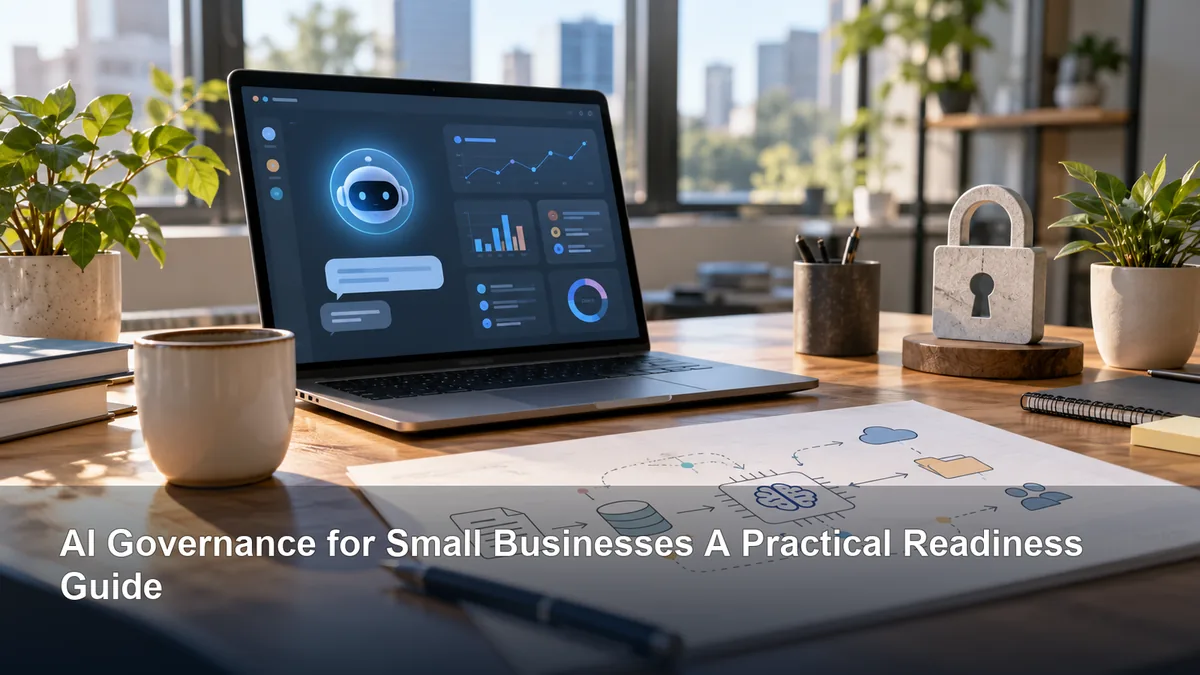
AI Governance for Small Businesses A Practical Readiness Guide
Before a small business connects AI to customer data or daily operations, it should define the task, data boundaries, review process, and fallback plan. A simple governance routine makes experimentation safer and easier to evaluate.
The short answer
AI governance for a small business is the set of practical rules that determines which AI tools employees may use, what information can be entered, who checks outputs, and who is accountable when something goes wrong. A company does not need a large compliance department to define those boundaries. It can start with a use-case inventory, data classification, named owner, human review, vendor review, and incident process. HLS AI Solutions describes itself as providing AI solutions for businesses; prospective clients should confirm current services and implementation scope directly. The NIST AI Risk Management Framework offers a voluntary structure for governing, mapping, measuring, and managing AI risks. This guide turns those ideas into an accessible starting point, while recognizing that legal obligations vary by industry, data, and jurisdiction.
Start with a business task rather than a technology label
An AI project should begin with a specific problem: for example, drafting internal summaries, sorting service requests, or searching approved procedures. “Use AI across the company” is too broad to evaluate. Define who will use the tool, what input it receives, what output it produces, and which decision remains with a person. A narrow task makes it easier to compare the tool with the current process.
A useful way to evaluate start with a business task rather than a technology label is to connect it to the decision the reader is trying to make about AI readiness, data governance, human review, and risk management for small business adoption. For business owners and operations leads evaluating generative AI or AI-supported tools, broad labels are less helpful than the relevant facts: what happened, when it happened, what records exist, and which conditions could change the answer. Organizing those facts helps the responsible professional explain what is confirmed, what still needs checking, and which next step fits the situation.
Inventory tools already in use
Employees may use AI features embedded in email, office software, customer platforms, or web browsers without a formal launch. Create a simple inventory of tools, accounts, business purpose, connected data, and vendors. Ask teams what they use and where. The inventory helps identify duplicate subscriptions, unapproved data flows, and tools that require a contract or security review.
The setting matters when considering inventory tools already in use. AI use-case scoping, data limits, vendor review, human oversight, testing, incident response, and accountability Those details can change timing, scope, eligibility, or how a result should be interpreted. A reader should distinguish what is generally true from what applies to their own circumstances. Sharing the background early gives the provider a chance to identify missing information, explain limits, and avoid drawing conclusions from an incomplete record.
Classify information before it reaches an AI system
Separate public information from internal business information, customer records, credentials, payment information, health data, and other sensitive material. Define which categories may be entered into each approved tool. A general-purpose chatbot should not receive information that the business has no authorization to share. If a workflow needs sensitive data, evaluate the vendor, legal basis, security controls, retention, and alternatives before testing.
Before choosing an approach, compare the expected benefit with the practical requirements. In this case, classify information before it reaches an ai system is connected to AI readiness, data governance, human review, and risk management for small business adoption, but the right route may depend on available evidence, access, cost, timing, and the reader’s priorities. Asking which factors actually change the decision makes a consultation more useful than trying to solve every possible issue at once.
Set review rules based on the consequence of an error
Not every output requires the same review. A draft social caption may carry less risk than a generated customer refund, employee evaluation, medical summary, or contract clause. Define which outputs may be used after a quick check, which require a trained reviewer, and which decisions cannot be delegated. NIST emphasizes roles and human oversight as part of AI risk management.
A written record can make follow-up more accurate. Note the dates, instructions, contacts, estimates, test results, approvals, or changes that relate to set review rules based on the consequence of an error. For business owners and operations leads evaluating generative AI or AI-supported tools, that record helps separate a new development from an earlier condition and gives the provider something concrete to review. Keep private information secure and share it only through an appropriate channel.
Test a tool with realistic but safe examples
Use synthetic, de-identified, or approved data when possible. Test common requests, edge cases, ambiguous inputs, harmful prompts, and failure conditions. Record whether the tool invents facts, omits context, exposes data, or produces inconsistent answers. Compare results with a human baseline. Do not assume a polished response is accurate because it sounds confident.
Terms that sound straightforward can cover different situations. When the discussion turns to test a tool with realistic but safe examples, ask what the word means in this specific setting, what is included, and what falls outside the scope. The answer matters because AI readiness, data governance, human review, and risk management for small business adoption may involve separate stages or decision-makers. Clear definitions reduce mismatched expectations and make written instructions or estimates easier to compare.
Review vendors, contracts, and data handling
Before connecting a tool to business systems, check what information it collects, how long it retains data, whether it uses inputs for model training, where data is processed, how access is controlled, and what happens when the contract ends. Review security documentation and subprocessors. Ask who can export, delete, or audit records. If regulated data is involved, obtain qualified legal and security advice.
Timing can affect the choices available. A routine question about review vendors, contracts, and data handling may allow time to gather records and compare options, while a deadline, worsening symptom, active leak, or scheduled launch can require a faster response. Tell the provider what dates or changes matter. The provider can then explain which timing is flexible and which part should be addressed promptly.
Write a short employee policy people can follow
A useful policy states approved tools, prohibited information, review expectations, disclosure requirements, and where employees can ask questions. Avoid vague language such as “use AI responsibly” without examples. Include a way to report errors or privacy concerns. Provide short training that explains risks and shows how to check output against trusted sources.
An online explanation cannot inspect the individual facts behind write a short employee policy people can follow. It can help a reader recognize the right questions, but it cannot verify documents, equipment, symptoms, code, or site conditions. The most reliable next conversation identifies AI readiness, data governance, human review, and risk management for small business adoption, shares the relevant background, and asks who is qualified to interpret it. That boundary protects readers from treating a general description as a personal answer.
Preserve privacy and customer trust
A business should consider whether customers need to know that AI is involved in a service or decision. Explain meaningful uses in clear language and avoid overstating capability. Use the minimum data necessary, limit account access, and avoid entering private data unless the workflow is approved. Privacy and transparency obligations depend on the service and applicable law.
Different options can be reasonable for different reasons. Ask what alternatives were considered, what tradeoffs each one brings, and what information would change the recommendation. For preserve privacy and customer trust, this comparison should account for AI governance is risk-based and must reflect applicable laws, contracts, customer expectations, and the sensitivity of data. A clear explanation does not require the reader to make an immediate choice; it gives them enough context to understand the consequences and decide what follow-up is needed.
Create an incident response and correction process
Define what employees should do if AI produces an incorrect result, discloses information, or takes an unintended action. Identify who pauses the workflow, contacts the vendor, notifies affected people when required, preserves evidence, and restores the prior process. Document incidents and near misses. A tool should have a practical way to be overridden or disabled.
Local details can influence the practical process even when the underlying principles are similar. In small and midsize organizations, the reader may need to confirm service coverage, appointment location, court or filing venue, parking and access, or the local professional responsible for the work. Verify those details directly with HLS AI Solutions. Accurate local information helps people reach the correct office or service without assuming that every location follows the same process.
Measure outcomes and ongoing reliability
Choose measures connected to the original task: staff time, error rate, turnaround, quality, customer satisfaction, or operational cost. Track limitations and exceptions, not just successful examples. Recheck the system after model, software, data, or business-process changes. A one-time pilot does not establish that the tool will remain suitable as the work changes.
A good handoff identifies who owns the next action. After reviewing measure outcomes and ongoing reliability, clarify who will provide records, approve a change, interpret a result, schedule the work, or contact another professional. For business owners and operations leads evaluating generative AI or AI-supported tools, naming that responsibility reduces delays and duplicated effort. If the first plan changes, record why it changed and what new information led to the update.
Keep a human fallback for essential work
A business should know how the process continues if an AI service is unavailable, produces an uncertain answer, or fails a review. Staff need a clear manual procedure and authority to stop automated actions. Keep original records accessible and preserve a responsible human contact for customers. This protects continuity and prevents employees from treating the AI output as mandatory.
The limits of a recommendation are as important as its benefits. The answer may depend on AI governance is risk-based and must reflect applicable laws, contracts, customer expectations, and the sensitivity of data. Ask what would make the proposed approach unsuitable, what warning signs require a different response, and when the issue should be reviewed again. This keeps the discussion realistic and gives readers a way to recognize when new information deserves attention rather than relying on a plan that no longer fits.
How an AI implementation partner can help
An implementation partner may assist with use-case selection, data and workflow mapping, tool configuration, testing, staff training, and measurement. HLS AI Solutions presents itself as an AI solutions provider; ask which services it currently offers, what systems it supports, how it handles sensitive data, and what human approvals remain. A responsible project should define scope, ownership, risks, and exit options before expanding.
A useful way to evaluate how an ai implementation partner can help is to connect it to the decision the reader is trying to make about AI readiness, data governance, human review, and risk management for small business adoption. For business owners and operations leads evaluating generative AI or AI-supported tools, broad labels are less helpful than the relevant facts: what happened, when it happened, what records exist, and which conditions could change the answer. Organizing those facts helps the responsible professional explain what is confirmed, what still needs checking, and which next step fits the situation.
A practical example for a growing business
Consider a hypothetical small business or agency working through AI readiness, data governance, human review, and risk management for small business adoption. The team identifies one concrete objective, reviews the current process and evidence, assigns an owner, and records what a successful result would look like. It tests a limited change with the people who will use it, checks the effect on customers, and keeps a record of approvals and results. If a tool or platform cannot support a required control, the team pauses and chooses a different approach rather than forcing a fit.
This example is illustrative, not a claim about a client result or a guaranteed service outcome. A business should make decisions from its own data, capabilities, budget, contracts, and customer needs. It should be able to explain what changed, who approved the work, and what remains uncertain. That discipline helps separate useful progress from activity that merely looks technical. A provider can help scope an engagement, but the company remains responsible for its accounts, content, data, and final decisions.
Before committing to a larger project, write down the baseline, the people responsible for approval, the information that may be shared, and the measure that will show whether the work helped. Confirm access rights, ownership of accounts and files, recurring fees, and how to pause or reverse a change. A useful proposal describes deliverables and dependencies in plain language. Start with a manageable scope, review the actual outcome with staff or customers, and expand only when the process is reliable and its limits are understood.
Frequently asked questions
What is AI governance for a small business?
It is a practical set of rules and responsibilities for choosing AI tools, protecting information, reviewing outputs, managing errors, and deciding who remains accountable for business decisions.
Does a small business need an AI policy?
A short policy helps employees understand approved tools, data limits, review requirements, and escalation steps. The level of detail should match the business’s data, industry, and consequences of errors.
Can employees enter customer information into public AI tools?
They should do so only if the business has approved the tool and the data use complies with privacy, contractual, and legal requirements. Sensitive information should not be entered casually.
How should a company choose its first AI use case?
Choose a narrow, measurable task with manageable risk and clear human ownership. Define inputs, expected outputs, success measures, and a manual fallback before testing.
Should AI make final decisions about customers or employees?
High-impact decisions need careful review of law, fairness, accuracy, and accountability. A business should define human review and appeal paths, and should not delegate consequential decisions without qualified assessment.
How can a small business test AI safely?
Use approved or synthetic data, test ordinary and difficult cases, compare output with a human baseline, record errors, and keep a reviewer who can stop the process.
What should a business ask an AI vendor?
Ask about data retention, training use, security, access controls, subprocessors, audit logs, model changes, deletion, incident reporting, and what happens at contract termination.
Does NIST require businesses to follow the AI Risk Management Framework?
NIST describes the AI RMF as a voluntary framework. Laws, contracts, and sector rules may impose separate obligations. A business should assess its own requirements.
What happens when an AI system gives a wrong answer?
A defined incident process should pause affected actions, preserve the relevant input and output, notify the owner, correct the record, and assess whether a customer or regulator must be informed.
Does HLS AI Solutions help businesses implement AI?
HLS AI Solutions identifies itself as an AI solutions provider. Contact the company to confirm current services, supported systems, project scope, data practices, and implementation process.