An AI assistant tells a shopper that a store accepts returns for 60 days. It even links to the store. Open that link and you might find last winter’s holiday exception. The source is genuine. The answer can still be wrong for a purchase made today.
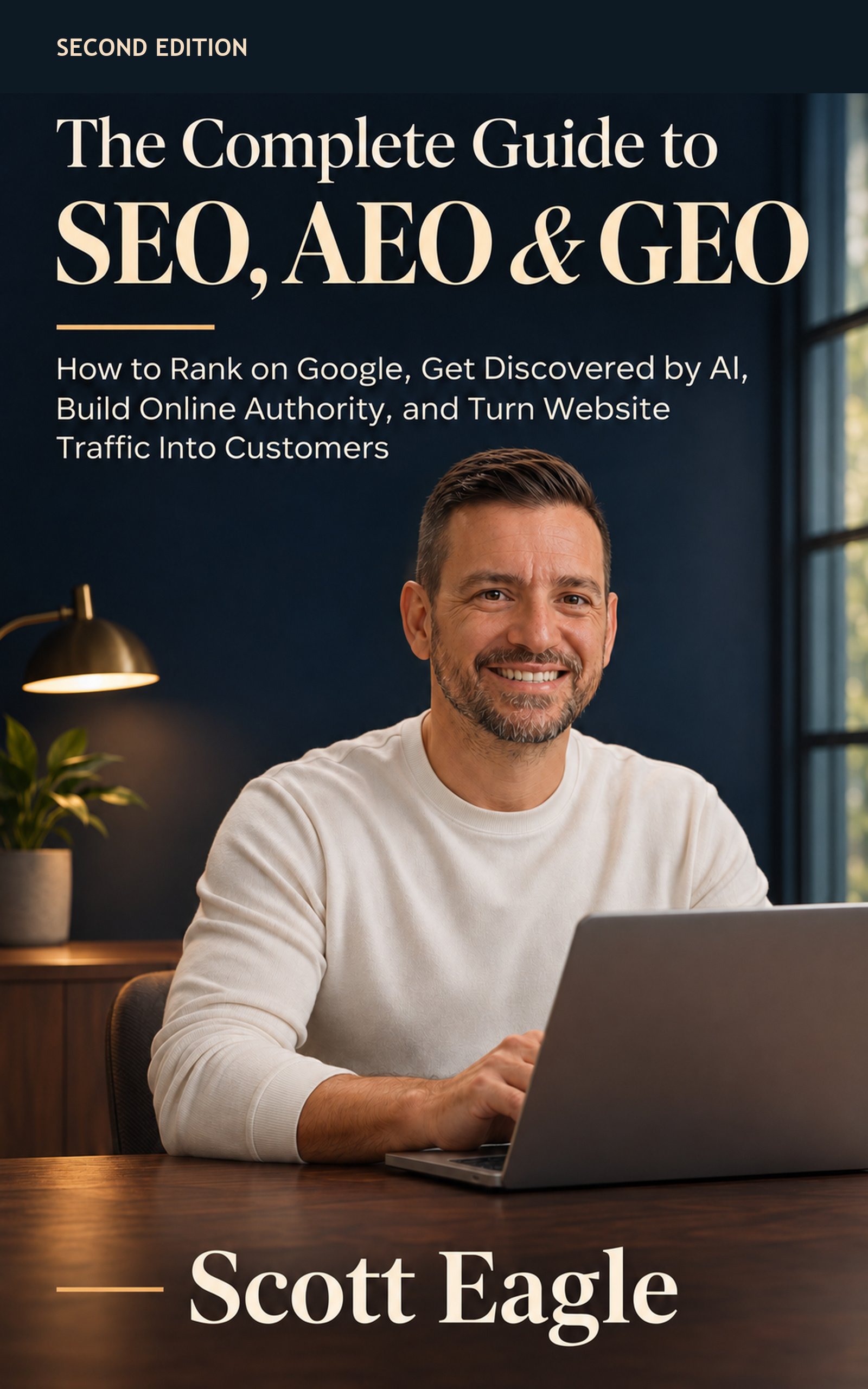
Scott Eagle explores an expired return-policy example in The Complete Guide to SEO, AEO & GEO. To check a similar answer about your own business, start with a single claim that a customer could act on.
How do you verify an AI citation?
Save the exact question, answer, citation URL, and date. Open the cited page and locate the passage that would have to be true for the answer to hold. Compare the item, dates, location, and exceptions in that passage with the customer’s situation. A link to the right business is only the start of the check.
Work through the return-policy example
Suppose a current policy allows returns within 30 days of delivery, while a dated holiday page allowed 60 days for qualifying purchases. Ask: “Can I return a regular-price item 45 days after delivery if I bought it in March?” Record the assistant’s answer before giving it a link or correcting it. Supplying the policy first would test a different task.
If the assistant cites the holiday page, copy the sentence that sets the longer window and the sentence that limits it to holiday purchases. If it cites the current page, check whether the answer preserved the 30-day limit and its starting point. If it gives no source, record that too. You can assess the claim against the policy, but the answer has given you no citation to verify.
Make the correction where the evidence lives
If the current policy is ambiguous, ask its owner to confirm the wording. Put the effective dates beside the exception and link an archived promotion to the current policy. If the source is already accurate, keep a record of the mismatch before changing the site. Repeat the same question in a fresh conversation and note the date and result. One corrected answer is one observation. For a way to track repeated tests, see our guide to evaluating AI agents beyond accuracy. For answers shown in Google Search, Google explains how AI Overviews and AI Mode use supporting links.
A worksheet for the next check
Use five columns in your audit notes: customer question, claim, cited passage, conditions the answer missed, and next action. That gives the person responsible for the policy enough detail to reproduce the issue.
For more on testing AI answers alongside traditional search, see the second edition of The Complete Guide to SEO, AEO & GEO, written by Scott Eagle and published by High Level Studios LLC. It includes seven field worksheets and a 90-day action plan. Kindle ebook on Amazon · Paperback on Amazon.